By Ahsan Ali
If your hair frizzes the moment you step out into Faisalabad humidity, you have probably heard a friend recommend a keratin treatment. It promises smooth hair that dries faster and stays sleek for months. But before you book, you need to know what it really does, what it costs and which version is safe for you.
A keratin treatment is a salon smoothing service that coats each strand with keratin protein and seals it in with heat. Keratin is the same protein your hair is made of, so the treatment fills gaps in the outer layer and leaves the surface flat and shiny. It tames frizz and cuts drying time, but it is not a permanent straightener and it will not change your natural curl for good.
That distinction matters, especially in wedding season. Many women book the treatment a week before a big event expecting poker-straight hair, then feel let down when their natural wave softens instead of vanishing. Go in with the right expectation and you will love the result, while going in expecting magic will leave you blaming the salon for a promise the treatment never made.
What a Keratin Treatment Actually Does
Think of each hair strand as a roof covered in tiny tiles. Those tiles form the cuticle, the protective outer layer of your hair. Heat styling, colour, bleach and even daily brushing chip those tiles away, so the surface turns rough and catches on itself, leaving the roughness you see as frizz and feel as dryness.
A keratin treatment works by filling those chips. Your stylist washes your hair with a clarifying shampoo, applies a keratin-rich formula in small sections and then seals it with a flat iron at high heat. The heat locks the protein into the cuticle so the surface lies flat again and reflects light, which is why treated hair looks so glossy in photos.
The practical payoff is time. Most women find their blow-dry drops from forty minutes to fifteen or twenty, because the hair no longer fights the brush. Your morning routine gets shorter, your straightener gets less use and your hair stays neat through a long day of work or a family function, which makes it a convenience treatment first and a beauty treatment second.
Formaldehyde: The Question You Must Ask
Here is the part you must not skip: some older keratin formulas release formaldehyde gas when heated with a flat iron. Formaldehyde is a strong irritant that can sting your eyes, irritate your throat and trigger coughing or a rash during the appointment. Health authorities have warned salons about it for years, which is why the ingredient deserves a direct question before you sit in the chair.
The good news is that formaldehyde-free formulas now exist and many good salons use them as standard. These versions smooth with gentler ingredients and produce far less fume, though they may soften curl a little less dramatically than the old formulas, yet that softer result still beats an appointment that leaves you coughing.
So ask plainly before you book: does your formula contain formaldehyde or release it when heated? A trustworthy salon answers without dodging and shows you the product bottle if you ask. If the stylist brushes the question aside or cannot name the product, walk away, because your lungs are worth more than any discount.
Read more: Hair Spa Treatment at Home vs Salon: What’s Worth Your Money
Who Should Get One and Who Should Wait
A keratin treatment suits you best if your hair is frizzy, wavy or hard to manage and you spend too long styling it every morning. It also suits hair roughened by colour or repeated straightening, because the protein fills the damage those processes leave behind. Women with thick hair that takes forever to dry tend to notice the biggest change.
It is less ideal if you love your natural curl and want to keep every bit of volume. The treatment relaxes curl, so tight curls turn into loose waves and fine hair can look flatter than you hoped. If volume is your priority, tell your stylist before the first section goes on so they can adjust the formula and the iron passes to keep more body in your hair.
Some women should wait or check with a doctor first. Pregnant women, breastfeeding mothers and anyone with scalp sores, eczema or a history of breathing trouble should be cautious, especially around formulas that release fumes. Teenagers should also skip strong formulas until their hair and scalp are fully mature, so when in doubt, get a patch test and have an honest chat with your stylist, since both cost nothing and prevent regret.
What Happens in the Salon Chair
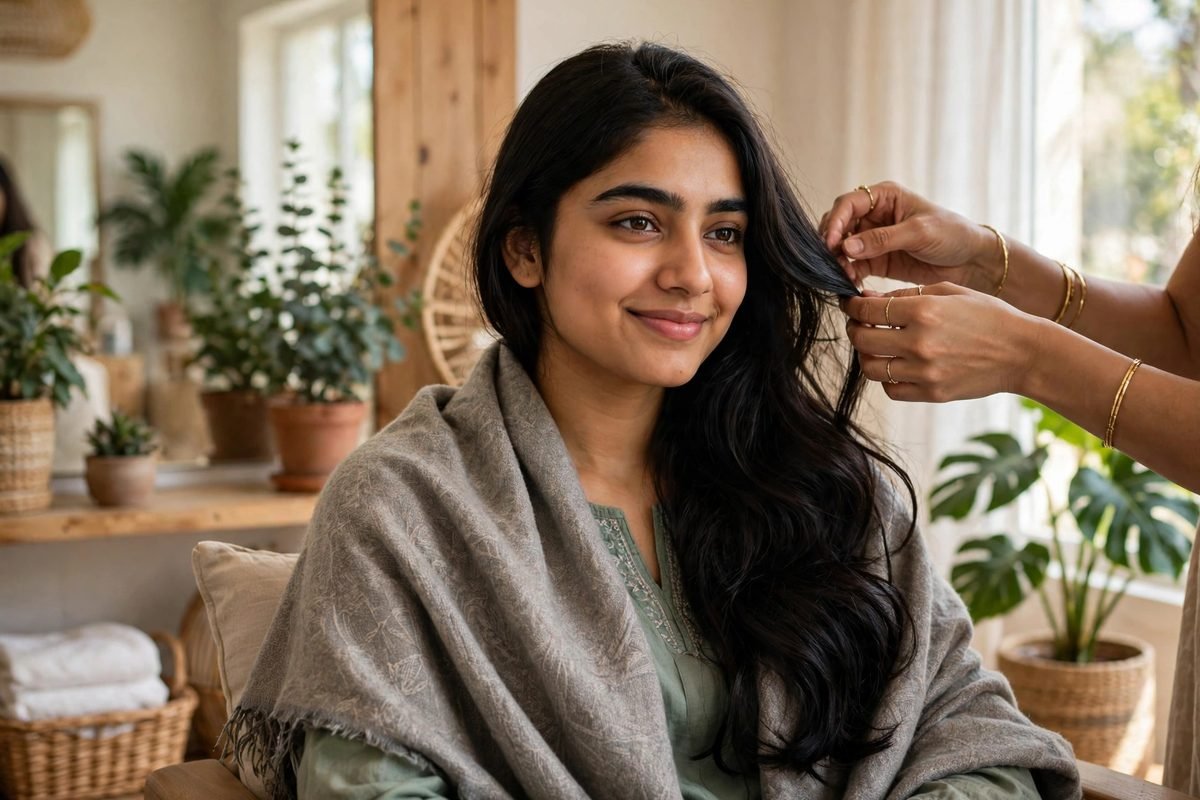
Set aside two to three hours for the appointment. It starts with a deep clarifying wash that strips oil, dust and product buildup so the formula can reach the hair shaft. Your stylist then sections your hair and brushes the keratin formula through from roots to ends, taking care to coat every strand evenly.
Next comes the long part: blow-drying and flat-ironing section by section. The iron usually runs hot, around 200 degrees or more, because the heat is what seals the keratin in place. This stage takes the most time and it is where a skilled stylist earns their fee, since rushed ironing leaves patchy results that wash out in weeks.
At R Zara Salon, our professional hair services team finishes with a cool rinse and a final check in good light, so you leave knowing exactly how your hair should look and feel. Ask them to show you the product they used and to write down your aftercare steps before you leave. A good salon never rushes you out the door.
Read more: Split Ends Treatment: Causes, Fixes and Prevention
How Long It Lasts and What It Costs in Pakistan
With proper care, a keratin treatment lasts around three to five months. Salon results usually outlast home kits, because the professional formula is stronger and the sealing is more thorough. Your own hair type matters too: coarse hair tends to hold the smoothing longer, while fine hair and frequent washing fade it faster.
Price in Pakistan varies with hair length, thickness and the salon you choose. A full treatment at a reputable city salon commonly runs from a few thousand rupees for short hair to well over ten thousand for very long or thick hair. Be wary of prices that look far too cheap, since a suspiciously low price often means a diluted product or an older formaldehyde formula.
Think of the cost per month, not per visit. A treatment that lasts four months works out far cheaper per month than a weekly blowout habit. If you are booking for a wedding, time it two to three weeks before the event so the hair settles into its glossiest state for photographs — many brides pair the visit with face treatment services on the same trip, so skin and hair peak together.
Aftercare That Protects Your Money
Aftercare decides whether your treatment lasts five months or five weeks. The first rule is the waiting gap: most traditional formulas ask you to avoid washing for 48 to 72 hours after the appointment. During that window, skip ponytails, clips and tucking hair behind your ears, because creases can set into the coating while it settles, though some newer formulas allow same-day washing, so follow your own salon’s advice rather than a friend’s.
After the gap, switch to a sulphate-free shampoo and conditioner. Sulphates are strong detergents that strip the keratin coating away with every wash, so one harsh shampoo can undo weeks of benefit. Wash two to three times a week instead of daily, use lukewarm water and finish with a cool rinse to keep the cuticle flat, then add a weekly deep mask for moisture without disturbing the coating.
Swimming needs care too. Chlorine and salt water both wear the treatment down, so rinse with fresh water before you swim and again right after. A swim cap helps, though it will not keep every drop out; with these habits your hair stays smooth through Faisalabad summer humidity and the dry winter fog season alike.
Read more: Hair Oiling the Right Way: A Pakistani Guide to Strong Hair
Keratin Treatment or Something Else?
A keratin treatment is not your only option, so compare honestly before you pay. A hair spa gives deep moisture and shine for two to three weeks at a much lower price, which suits you if your main problem is dryness rather than frizz. Rebonding gives a permanently straight result, but it is harsher on the hair and far harder to reverse if you change your mind.
Home keratin kits exist, but they rarely match salon results. The formula is weaker, the iron work is harder to do evenly on your own head and mistakes show for months. If budget is tight, a salon hair spa plus a good home oiling routine will do more for your hair than a cheap kit applied badly, so save the keratin appointment for when you can afford a proper salon job.
The honest summary is simple. A keratin treatment buys you months of easier mornings, calmer frizz and glossy hair that photographs beautifully. It does not repair split ends, it does not straighten hair forever and it demands proper aftercare, so know those three facts and you will choose well.
If you are ready to talk it through, book a consultation at R Zara Salon in Faisalabad and bring your questions with you. Our stylists will examine your hair in good light, tell you honestly whether a keratin treatment suits you and plan the timing around your next big event. Many clients also add pedicure services to the same visit so you leave with your whole look ready, because smooth hair is wonderful but hair you chose with open eyes is better.