By Mohsin Ali
The best bridal dupatta hairstyles are built backwards. You start with the dupatta rather than the curls, because a style that cannot carry a heavy dupatta for ten hours is decoration rather than a wedding hairstyle. If your dupatta slips during the rukhsati or slides off in the middle of a dance at the mehndi, no amount of pretty curls will rescue the photographs.
A Faisalabad wedding week asks more of a hairstyle than almost any other occasion. There is the mehndi with its dancing, the barat with its long greeting lines and hours of photography and the valima with its formal dinner and late goodbyes. Through all of it your dupatta stays on your head, pulling gently downwards, while winter fog waits outside for the drive home.
This guide covers the styles that hold, the pinning method stylists trust and the small prep steps that make the difference between a dupatta that stays put and one you keep fixing. None of it needs expensive products. It needs the right base, the right pins and a plan made before the wedding week begins.
Why the Dupatta Is the Hardest Test for Bridal Hair
A dupatta is not like a veil that rests lightly on the head. A bridal dupatta carries embroidery, borders and sometimes a second layer of fabric.
All of that weight hangs from a few pin points for hours. Every time you bend to greet an elder, turn for a photograph or join the dancing, that weight shifts and tugs.
Heat adds to the problem. A packed hall in December warms up fast. Warmth softens curls and loosens spray.
Sweat at the hairline makes pins slide. Steam near the buffet line does the same quiet damage. A style that looked firm in the salon mirror can feel soft by dinner.
Then there is the jewellery. A tikka, a jhoomar and heavy jhumkas all pull in their own directions. Each one adds its own small weight to the same tired pin points.
The dupatta does not fail on its own. It fails when the whole system of pins, base and accessories was never built to share the load.
Build the Base First: Prep That Makes Pins Hold
Secure bridal hair starts the night before the event. Wash your hair the evening before and let it dry fully, because day-old hair has natural grip that freshly washed hair lacks. Fresh hair is soft and slippery, so pins slide out and curls drop faster.
Skip heavy oil on the morning of the function. A light oiling two or three days before keeps hair healthy, but oil on the day itself weighs curls down and makes spray slide off. If your roots feel greasy, a little dry shampoo at the crown adds texture and lift without another wash.
Book a trial with the stylist who will do your hair on the day. Bring your actual dupatta to it.
A trial at a salon offering professional hair services lets your stylist test the real weight of your real dupatta on your real hair.
At the trial, ask for the practical checks. Can you bend forward without the dupatta shifting? Can you turn your head quickly?
Does the style still feel comfortable after an hour? A style that passes those three tests will usually survive the wedding day.
Read more: Bridal Hair Prep: Strong Shiny Hair Before Your Wedding
The Anchor Method: How Stylists Pin a Dupatta So It Never Slips
The single biggest pinning mistake is pinning the dupatta to your dress or to loose surface hair. A dupatta pinned only to fabric will travel with the fabric. Fabric moves.
The fix is the anchor method, which every experienced bridal stylist uses.
Your stylist builds a small anchor section of hair at the exact spot where the dupatta will rest, usually just behind the crown. She backcombs that section lightly so it has texture, then pins the dupatta into the anchor with two strong pins crossed in an X shape. The weight then pulls on the anchor instead of dragging your whole style loose.
Pin technique matters as much as pin placement. Push each bobby pin in with the wavy side down against your scalp, because the ridges grip the hair and stop the pin sliding.
For extra hold, use the locking move: slide the pin in against the direction the hair is pulled, turn it, then push it back into the style. That turn creates a hook that resists hours of movement.
Spread the weight across two or three pin points rather than trusting one. One pin at the crown and one on each side shares the load, so no single pin carries the full dupatta. Use pins that match your hair colour so the extra pins stay invisible in photographs.
Finish with a test before you leave the chair. Nod, turn your head from side to side and bend forward as if greeting someone.
If anything shifts, your stylist can add a pin in seconds. Fixing it now beats fixing it in front of three hundred guests.
Five Secure Styles That Survive a Full Wedding Day
Not every pretty style can carry a dupatta. These five can, because each one gives the dupatta a firm base to pin into and keeps the weight close to the head.
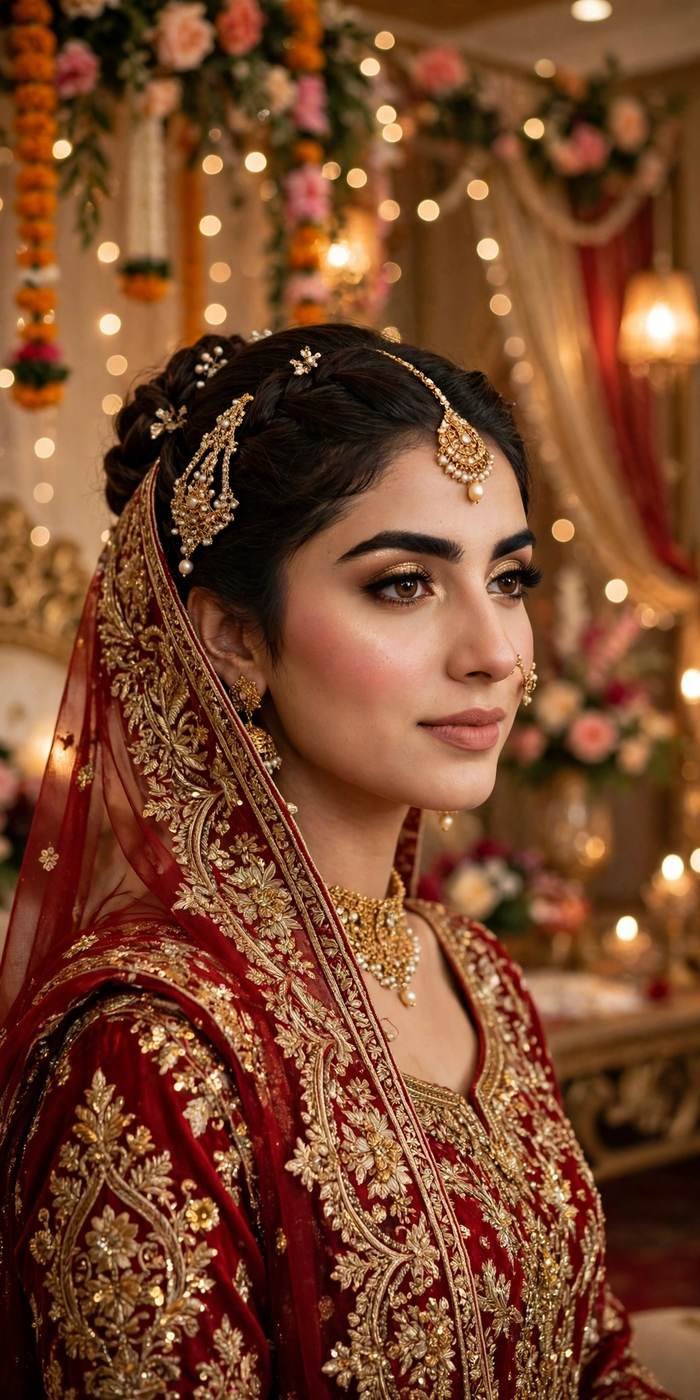
The low bun is the classic for a reason. It sits at the nape, keeps hair off your neck and gives the dupatta a solid mass to anchor into. A braided base inside the bun adds grip while a few loose face-framing strands keep it soft rather than severe.
The braided crown wraps a braid around the head like a headband, which spreads the dupatta weight across the whole crown instead of one point. It suits brides who dance hard at the mehndi, because the braid itself is the structure and it barely moves.
A twisted chignon is the softer cousin of the bun. Twists lock into each other, so the style holds its shape even when the dupatta pulls.
It pairs beautifully with a lighter net dupatta. Ask your stylist to pin the twists firmly at the base so the chignon cannot rotate under weight.
The half-up style works if the top half is properly secured. The front sections are pinned back into a small twist or braid at the crown, which becomes the dupatta anchor, while the lengths fall in waves below. It gives you open hair without asking loose strands to carry a dupatta.
The side braid gathered into a low bun is the best choice for very long, thick hair. The braid controls the length, the bun controls the weight and the dupatta pins into the braid where it crosses the crown. Thick desi hair holds braids beautifully, but it needs strong pins and careful sectioning or its own weight pulls the style loose.
Read more: Party Hairstyles for Wedding: Styles That Last All Night
Dupatta Fabrics and Weights: Match the Pin to the Cloth
A light net dupatta and a heavy velvet one are different engineering problems. Net is light but slippery, so it needs more pins with a good grip rather than stronger pins.
Organza behaves the same way. A pin that slides on silk will slide on organza too.
Velvet is the winter favourite in Faisalabad. It is heavy.
A velvet dupatta needs the full anchor method with three pin points at least, plus U-shaped hair pins for extra hold. Never trust a single bobby pin with velvet, however neat it looks in the mirror.
Embroidered borders change the balance. The border is the heaviest part of the dupatta, so the side carrying the border pulls harder than the plain side.
Ask your stylist to add one extra pin on the border side to even the load. Check the drape from behind before you leave.
Silk and chiffon dupattas slip most on freshly washed hair, which is another reason to arrive with day-old hair. A light mist of texturising spray on the anchor section gives slippery fabric something to grip. A small hidden stitch between dupatta and anchor section is a trick some stylists use for the barat when the dupatta must not move at all.
Mehndi, Barat and Valima: One Base, Three Looks
You do not need three completely different hairstyles for three events. Start with one strong base, like a low bun or soft curls pinned at the crown, then change the accessories and the front section each night. A maang tikka for the mehndi, a heavier jhoomar for the barat and a simpler pin set for the valima can make the same base look brand new.
Plan the order with your stylist before the week begins. The mehndi is the night for dancing, so pick your most secure style first. The barat calls for the most formal look, while the valima suits something softer and easier to wear through a long dinner.
Rest your hair between events. Remove pins gently instead of pulling them out, let your hair down overnight and give it a light conditioning rinse between the barat and the valima. Many brides also book face treatment services a few days before the first event, so skin and hair prep stay on the same calm schedule.
Read more: Bridal Mehndi Night: Hair and Skin Prep Guide
Your Dupatta Rescue Kit and Touch-Up Plan
Even a perfect style deserves a backup plan. Pack a tiny kit and hand it to your most reliable cousin before the function starts: six extra bobby pins in your hair colour, two U-pins, a travel-size hairspray, a small comb and a few safety pins for dupatta emergencies.
Fix problems early rather than waiting. If you feel the dupatta shift, step aside and re-pin it at once instead of letting the whole style loosen through the evening. A quick re-pin takes a minute, while a collapsed style takes half an hour and a quiet room you may not have.
Blot sweat instead of rubbing it away. Press blotting paper gently against your hairline and neck, then leave the style alone. Rubbing drags pins loose and turns smooth hair frizzy, which is the opposite of what you want in photographs.
Teach one person your pin plan. If your cousin knows where the anchor pins sit, she can fix a slip in seconds without disturbing the rest of the style. Brides who keep the plan secret spend the evening worrying, while brides who share it spend the evening dancing.
Mistakes That Send a Dupatta Sliding
The biggest mistake is pinning the dupatta to the dress alone. Dress fabric stretches and shifts, so the dupatta travels with it. Always pin into hair, with the dress pin as a helper rather than the main hold.
The second mistake is arriving with freshly washed, slippery hair and expecting pins to grip it. Tell your stylist honestly when you last washed, so she can add texture instead of fighting your hair all evening.
The third mistake is trusting too few pins. Two pins look neater than six, but a heavy bridal dupatta needs the extra support. Hidden pins do not show in photographs anyway.
The fourth mistake is overloading the style with accessories. A tikka, heavy jhumkas, a jhoomar and a dozen decorative pins all pull in different directions. Pick two statement pieces and let the hairstyle itself do the rest.
Finally, do not skip the trial. A trial is where problems are cheap and fixes are easy, while the wedding day itself is where problems are expensive and fixes are impossible. Book the trial, bring the dupatta, test the anchor and walk into your mehndi, barat and valima knowing your dupatta will stay exactly where you put it.
Want bridal hair that holds your dupatta from the first song to the last goodbye? Visit our contact page to book your bridal trial at R Zara Salon in Faisalabad and test your dupatta style before the wedding week begins.