By Ahsan Ali
If you grew up in a Pakistani home, hair oiling needs no introduction. It was the Sunday-evening ritual when your mother or dadi sat you down, warmed a little sarson oil between her palms and worked it into your scalp with firm, loving fingers. Somewhere between school deadlines, office work and busy weekends, many of us quietly stopped. It is time to bring the ritual back, because this old totka is not just a memory — it genuinely works.
But here is the thing most people get wrong. Hair oiling is not about drowning your hair in oil once a month or sleeping in a greasy bun for a week. The results come from doing it the right way: the right oil, the right amount, the right time on your head and the right wash after. Get those four things right and your hair will thank you within weeks.
Why Hair Oiling Actually Works
Let us start with the science, because our dadis were right long before the studies arrived. The star of the research is coconut oil. A well-known 2003 study by Rele and Mohile tested coconut, mineral and sunflower oils to see how they affected protein loss during washing. Coconut oil was the only one that clearly reduced protein loss, because its main fatty acid — lauric acid — is small enough to enter the hair shaft and physically stop protein from leaking out during the wash.
That matters more than it sounds. Every time you wash your hair, water swells the strands and carries away a little of the protein that keeps them strong. Over months and years, that slow loss shows up as thinning ends, breakage and hair that refuses to grow past a certain length. A proper pre-wash oiling routine puts a protective layer between your hair and the shampoo.
Then there is the massage itself. Gentle, steady fingertip massage during oiling boosts blood circulation to the scalp, which keeps the follicles active and healthy. Research on rosemary oil also raised eyebrows: a 2015 trial by Panahi and colleagues found rosemary oil comparable to minoxidil for promoting hair growth over the study period. So the ritual your grandmother insisted on was not superstition — it was prevention.
Choosing the Right Oil for Your Hair
Not every oil behaves the same way, and this is where many routines go sideways. Oils fall into two broad families. Penetrating oils — coconut, sesame and olive — enter the hair shaft and protect it from the inside. Coating oils — argan, jojoba and most silicone-heavy serums — sit on the surface and add shine. For pre-wash oiling, the penetrating family gives the real benefits.
Coconut oil is the safest all-rounder for most Pakistani hair types. It is cheap, easy to find in any Faisalabad bazaar and backed by the strongest evidence. Sarson oil, our desi classic, is warming and stimulating, though its strong smell and heat mean you should mix it with coconut oil rather than use it neat. Zaitoon, or olive oil, penetrates well but runs heavy, so it suits dry, thick or curly hair better than fine strands.
For fine or thin hair, badam (almond) oil is a lighter friend that will not weigh your hair down. Castor oil is the opposite: thick, sticky and powerful, but so heavy that it should always be blended with a lighter oil before use. And one warning worth repeating: skip the cheap bottles labelled “hair oil” that are mostly mineral oil and silicones. They coat the hair and make it look shiny for a day, but they do none of the real work.
Read more: Hair Spa Treatment: Home vs Salon
How Long Should You Leave the Oil In?
This is the most argued question in every salon and every family gathering. The honest answer is that it depends on your goal, but the research gives clear minimums. Thirty minutes is the floor for any real protection. One to two hours allows meaningful penetration into the shaft. Overnight oiling gives maximum benefit, but the effect plateaus after six to eight hours — leaving it on for days adds nothing except buildup and dust.
So here is a simple rule of thumb. If you are short on time, massage warm oil into your scalp and lengths forty-five minutes before your shower and you are already doing better than ninety percent of people. If you have a free evening, two hours is the sweet spot. If you want the full dadi treatment, oil your hair at night, sleep with it in a loose braid and wash it out in the morning.
How often should you repeat it? Two to three times a week suits most hair types. Very dry or curly hair can handle more frequent oiling, while fine, easily flattened hair should stick to once a week with a light oil. Oiling before every shampoo is a perfectly fine rhythm if your schedule allows it.
Read more: How Often Should You Wash Your Hair?
Step by Step: Oiling the Right Way
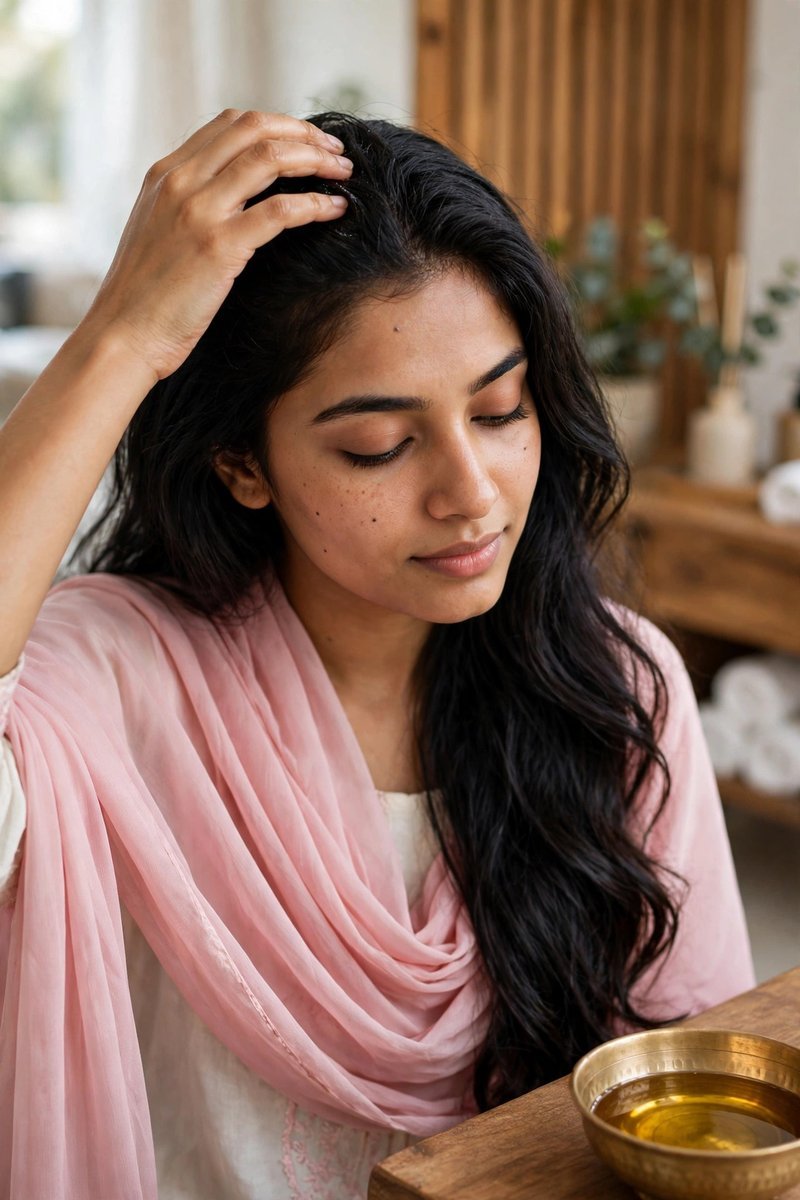
Now the method itself. Start with slightly warm oil — never hot. Pour a tablespoon or two into a small bowl and warm it gently, either by standing the bowl in hot water or rubbing it between your palms. Oil that is too hot can irritate the scalp, while cold oil simply does not spread as well.
Part your hair into sections and apply with your fingertips, not your nails. Work the oil into the scalp with slow, circular movements, spending at least five minutes on the massage itself. This is the step most people rush, and it is the step that matters most for circulation and follicle health. Then draw the remaining oil down the lengths and focus extra attention on the ends, which are the oldest and thirstiest part of your hair.
Once applied, twist your hair into a loose bun or braid — never a tight style, which can stress freshly oiled strands. A warm towel wrap for fifteen minutes boosts absorption beautifully on a lazy day. When it is time to wash, use a gentle sulphate-free shampoo and be prepared for a double wash if you used a heavy oil like castor. Rinse with lukewarm water; very hot water undoes the moisture the oil just sealed in.
Mistakes That Undo All the Benefits
The most common mistake is simply using too much oil. More oil does not mean more benefit — it means more washes to get it out, and more washes mean more protein loss. One to two tablespoons is enough for most hair. Your scalp should feel coated, not swimming.
Scrubbing the scalp with your nails is another habit to drop. It creates micro-scratches that invite dandruff and irritation. Fingertips only, always. Oiling a dirty scalp is equally counterproductive: oil mixed with days of sweat and dust just sits there doing nothing. If your scalp is very dirty, shampoo first, let your hair dry, and then oil before the next wash.
Also beware of the sunlight trap. Oiled hair plus the harsh afternoon sun equals a dust magnet, especially in a city like Faisalabad. If you oil during the day, keep your hair covered or stay indoors. And resist the urge to sleep with oil every single night — daily heavy oiling without proper washing leads to clogged follicles and, ironically, more hair fall.
Read more: Split Ends Treatment Guide
Oiling for Winter and Wedding Season
Pakistani winters are brutal on hair. The dry air of December and January pulls moisture out of every strand, and indoor heating makes it worse. This is when a weekly oiling routine pays for itself: warm coconut oil on Sunday evening, washed out Monday morning, keeps the dryness and winter dandruff firmly in check. If flakes persist despite regular oiling, our team at professional hair services can take a proper look and guide you.
Wedding season is the other moment oiling earns its keep. If your sister’s or your own wedding is a few months away, start a twice-weekly oiling routine now rather than panicking in the last week. Hair needs time to show the results of consistent care — the shine you want in those wedding photos is built over weeks, not bought in a bottle the day before.
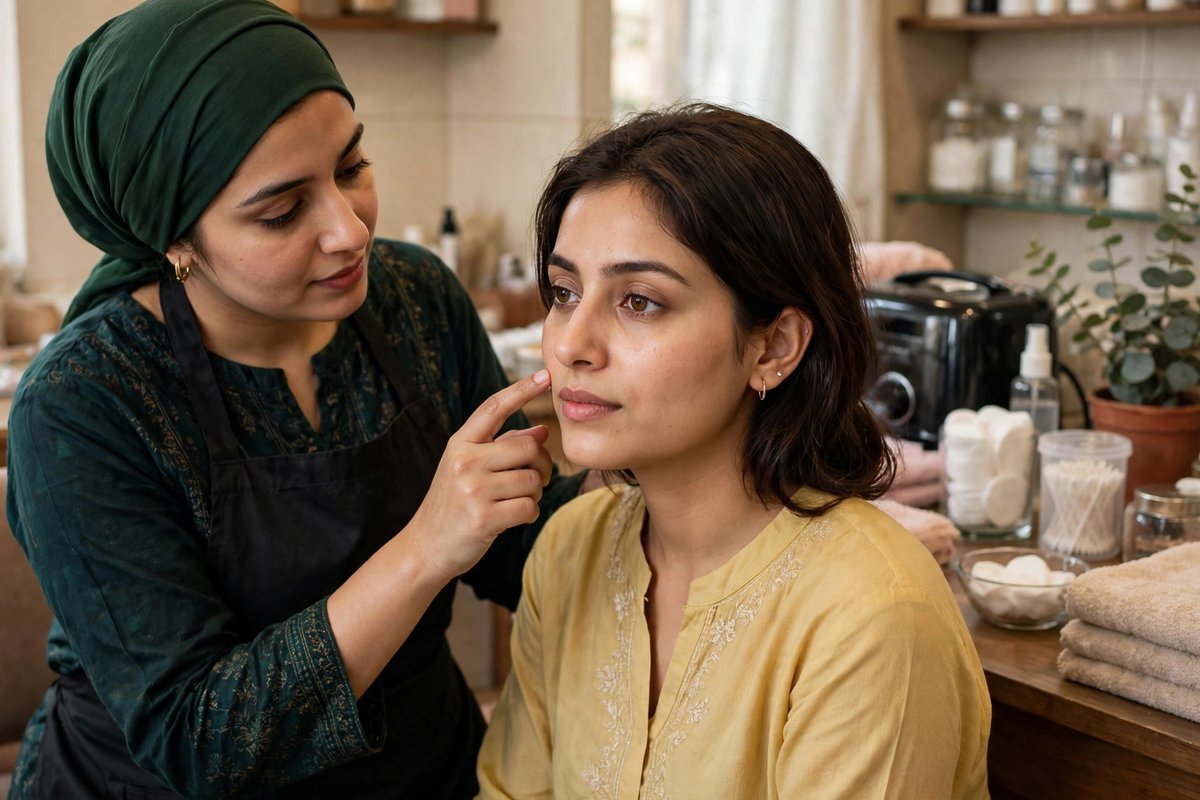
For special occasions, a salon treatment can take your home routine further. A proper hair spa combines deep oiling with steam and massage in a way that is hard to replicate at home, and it makes an excellent one-time boost before a big event. But the weekly home oiling stays the foundation — the salon is the polish, not the structure.
The truth about hair oiling is refreshingly simple: it works, it is cheap and it has been in our kitchens all along. Start tonight. Warm a little oil, take ten slow minutes for yourself, and let your dadi’s wisdom do what the science now confirms. If you would like personalised guidance for your hair type or a professional oiling treatment, get in touch with us — we would love to help your hair become the strongest version of itself.