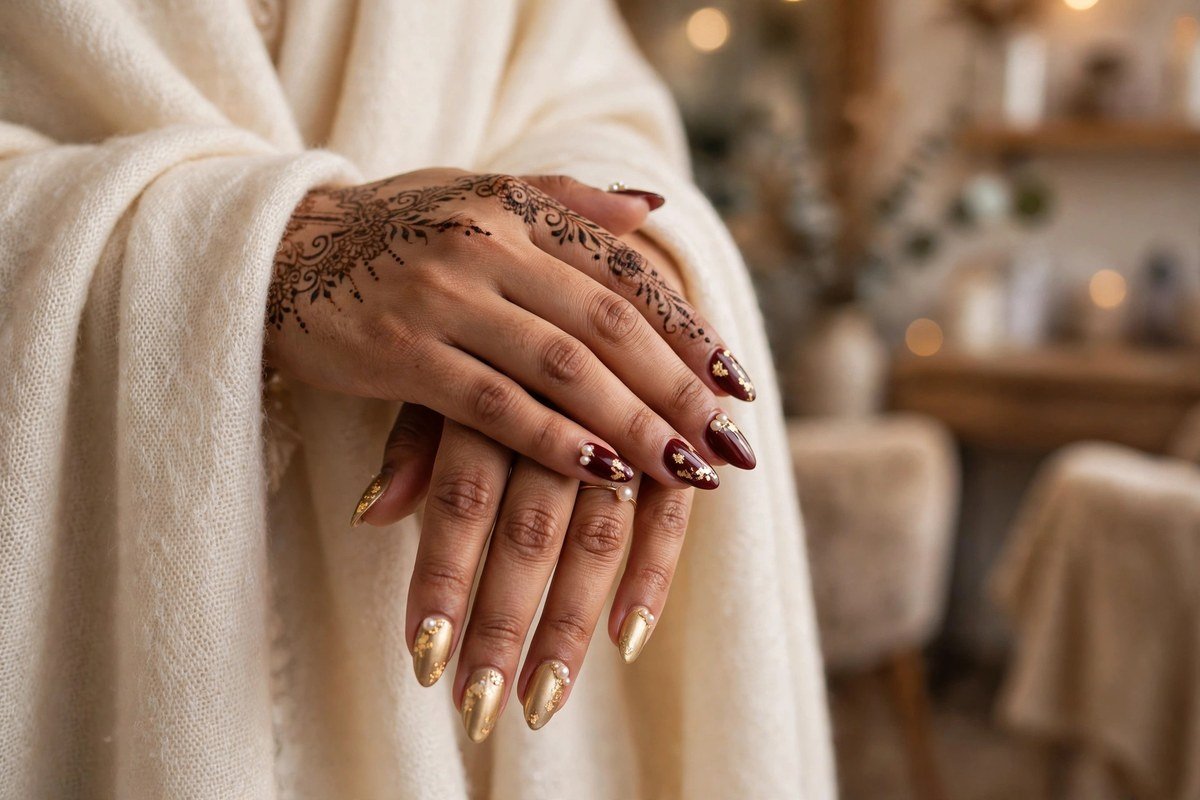
You have spent hours sitting patiently while the artist worked her magic. Now the real work begins. Good henna aftercare is what turns a pretty orange stain into that deep reddish-brown colour every bride dreams of. It is also what keeps your mehndi looking fresh through the mehndi night, the baraat and the days after.
Most people blame the henna paste when their stain fades fast. In truth, the paste has already done its job by the time it dries on your skin. What happens next is up to you. A few simple habits can add days to your stain.
This guide walks you through each stage in plain, simple steps: what to do while the paste is still on, how to take it off without spoiling the colour and how to protect it day after day.
Why Henna Aftercare Matters So Much
Henna stains the top layers of your skin. Its dye, called lawsone, binds with the keratin in your skin and slowly deepens in colour as it oxidises. That is why fresh mehndi looks bright orange at first and turns rich brown over the next day or two. It fades naturally as your skin sheds its outer cells.
Your hands and feet hold colour best because the skin there is thicker and warmer. Arms, legs and other areas usually fade faster. That is one reason bridal mehndi covers the hands and feet so heavily. Thick skin gives the dye more to hold on to and more time to develop.
Aftercare matters because water, soap, scrubbing and harsh chemicals strip stained skin cells away faster. Heat, oil and patience do the opposite and help the colour settle. Think of aftercare as the second half of your mehndi appointment.
Read more: Mehndi Designs 2026: From Simple to Bridal
The First Few Hours: Let It Dry and Seal It
Do not touch your mehndi while it is wet. Wet paste smudges at the lightest brush. One smudge can blur a whole motif. Sit still for 20 to 40 minutes and let the surface dry on its own. Keep your hands relaxed and away from your clothes, your phone and curious little hands.
Once the paste feels dry to the touch, seal it with the classic lemon-sugar mix. Dab the mixture gently over the design with a cotton ball. Do not drag or rub, or you will disturb the lines. The sugar keeps the paste stuck to your skin while the lemon juice helps the dye release. A light dabbing is enough. Too much liquid can make the paste run and blur fine details.
Leave the paste on for at least six to eight hours. Overnight is even better, especially for brides. The longer the paste stays in contact with warm skin, the deeper the stain. If you are sleeping with mehndi on, wrap your hands loosely in soft tissue paper or a breathable cloth. This stops flakes from falling on your bedding and keeps the design safe while you sleep.
Warmth is your friend during these hours. Cold hands stain poorly, so stay warm and comfortable. Sip a hot cup of chai or keep your hands tucked under a shawl on a winter evening in Faisalabad.
How to Remove the Paste the Right Way
When the time comes, scrape the paste off. Do not wash it off. Use the back of a butter knife, a spoon or simply your other hand to flake the dried paste away. You can rub a little coconut oil, olive oil or mustard oil over the design first to loosen stubborn bits. The oil also leaves a protective layer on your fresh stain.
Do not panic when you see the colour underneath. Fresh mehndi is always light and orange. The stain will darken steadily over the next 24 to 48 hours if you give it the chance. Judging it in the first hour is like judging a photograph before it has developed.
After scraping, rub in another thin layer of natural oil. Coconut oil and olive oil both work well. Mustard oil is the old family totka many Faisalabad households still swear by. Use just enough to coat the design lightly.
The First 24 to 48 Hours: Water, Heat and Patience
Try to keep water off your mehndi for at least 24 hours after you remove the paste. Water interrupts the oxidising process and can lighten a stain before it has fully developed. That means no handwashing if you can help it, no long showers and definitely no swimming. If you must wash your hands, be quick and pat them dry at once.
Plan your wedding week around this rule. Get your mehndi done two days before the main events so the colour reaches its darkest shade by the baraat. Mehndi done on the wedding morning often looks pale in photographs because the stain has not finished developing yet.
Keep your hands warm during this window too. Warm skin keeps the colour deepening nicely. You can hold a warm cup, sit near gentle heat or wear loose gloves on a cold night. Before any bath, rub oil over the stain first so soap and water cannot reach the design directly.
Read more: Winter Pedicure Care Guide
Daily Habits That Keep Your Mehndi Dark
Once your stain has fully developed, daily care decides how long it stays. Apply a little natural oil over the design once or twice a day to keep the skin soft and slow the shedding that fades the colour.
Be gentle with your hands in daily chores. Harsh dishwashing liquids, bleach-based cleaners and strong soaps wear a stain down fast. Wear gloves when you wash dishes or clean the house. Avoid scrubbing the design with a loofah or an exfoliating scrub until you are ready to let the mehndi go.
Chlorinated pool water fades the stain quickly, so skip the pool while you want your design to last. Short, lukewarm showers with mild soap are kinder to your stain than long, hot baths.
Moisturise the rest of your skin normally, but keep heavy chemical creams, whitening lotions and strong fragranced products away from the design. Products with acids or retinoids speed up skin shedding and fade henna faster. A simple natural oil or a gentle plain moisturiser is the safer choice for mehndi days. If you are planning other beauty treatments, book your pedicure services before your mehndi appointment rather than after, so soaking and scrubbing do not touch a fresh stain.
Bridal Mehndi: Extra Care for the Big Day
Bridal mehndi deserves extra patience because it covers so much skin. Book your appointment at least two days before the baraat so the colour gets its full 48 hours to darken. A bride who sleeps with her mehndi on and wakes up to a deep stain has done the hardest part right.
On the mehndi night itself, ask someone to help you with small tasks. Eating, drinking and holding a phone all become tricky with wet paste on your hands. Let family members look after you for a few hours. It protects the fine lines your artist worked so hard on.
After the wedding, keep the same routine going: oil the design daily, avoid harsh soaps and wear gloves for housework. Bridal mehndi on the hands and feet can last seven to 14 days with good care. Even as it softens, it should fade evenly rather than patchily, which looks far better in post-wedding photographs and family gatherings.
If you want a full bridal glow to match your mehndi, plan your other treatments in the right order. Facials and hair colour are best finished before mehndi day, not after. You can explore expert face treatments and professional hair services in advance so that nothing disturbs your stain during wedding week.
Read more: Nail Care Basics
Mistakes That Fade Your Mehndi Too Fast
The most common mistake is washing the paste off with water straight away. It feels tidy, but it weakens the stain at its most fragile stage. Scraping with oil is slower and messier, yet it protects the colour. Always choose scraping over washing on the first day.
Another mistake is picking at flakes or peeling the paste off early. Impatience costs colour. If you must remove your mehndi sooner than planned, accept that the stain will be lighter. There is no shortcut that gives you both an early removal and a dark stain.
Harsh home remedies can do more harm than good. Rubbing lemon juice directly on a fresh stain or scrubbing with salt can irritate your skin and fade the design unevenly. Stick to the simple, proven routine of sealing, scraping, oiling and avoiding water.
Finally, stay away from so-called black henna. Natural henna stains reddish-brown. Products sold as black henna often contain a chemical dye called PPD, which can cause serious allergic reactions and skin burns. If a cone promises an instant jet-black stain, do not use it. A safe, natural stain that darkens over two days is always worth the wait.
Do a small patch test before any new henna product, especially if you have sensitive skin or allergies. Apply a tiny amount on your inner arm and wait a day. If you notice redness, itching or swelling, wash it off and seek advice from a skin specialist. Your health matters far more than any design.
A Little Care Goes a Long Way
Beautiful mehndi is a partnership between the artist and you. The artist creates the design, but your aftercare decides how dark it becomes and how long it stays. Dry it gently, seal it lightly, keep it on overnight, scrape it off with oil and give it two full days to bloom.
So when wedding season arrives in Faisalabad and the dholki nights begin, plan your mehndi with the same care you give your dress. Book early, rest while it dries and protect it through the celebrations.
If you would like your mehndi or your bridal beauty routine planned by professionals, get in touch with R Zara Salon and book your appointment in advance. Our team will help you time every treatment so your mehndi looks its darkest on your biggest day.