By Mohsin Ali
Every October, the same quiet panic begins. The shower drain fills up.
The hairbrush looks like it belongs to someone else. You find strands on your pillow, your sweater, your prayer mat.
If this sounds familiar, breathe. You are not going bald.
Almost every woman in Pakistan notices heavier hair fall in winter — and there are clear reasons for it. Better still, most of it is fixable without expensive treatments.
This guide explains the real science behind winter hair fall, the everyday habits making it worse and the routine that actually brings it under control.
Read more: Facial vs Clean-Up: Which One Does Your Skin Actually Need?
Why Does Hair Fall More in Winter? The Science
Hair shedding is not random — it follows seasons, and research backs this up. Studies on seasonal hair loss show that shedding peaks in late autumn and winter for a large number of people. Here is what is happening on your scalp:
Dry air steals moisture. Winter air in Pakistan — especially the dry cold of Punjab — holds very little humidity.
Your scalp dries out, becomes flaky and the hair shaft turns brittle. Brittle hair does not just fall; it snaps.
Hot showers strip natural oils. Nothing feels better than a steaming shower on a cold morning. But very hot water dissolves the natural oils (sebum) that protect both your scalp and your strands, leaving hair dry, rough and prone to breakage.
Less sunlight means less vitamin D. Vitamin D plays a role in the hair growth cycle, and winter’s shorter days plus indoor lifestyles quietly lower your levels. Low vitamin D is one of the most common — and most overlooked — causes of seasonal shedding.
Friction increases. Woollen caps, shawls pulled over the head, high collars — winter clothing rubs against hair constantly. Add static electricity from dry air, and every removal of a cap pulls out strands that were barely holding on.
None of this means winter hair fall is “just something you must accept.” Understanding the causes is what lets you fight each one directly.
5 Winter Habits Secretly Destroying Your Hair
1. Washing with very hot water. Lukewarm water cleans just as well. Hot water is the single fastest way to dry out your scalp in winter.
2. Skipping oiling because “it is too cold.” This is exactly when your hair needs oil most. Cold weather is not a reason to skip oiling — it is the reason to do it twice a week.
3. Going out with wet or damp hair. Winter wind on wet hair is brutal. It weakens the shaft and invites breakage.
Dry your hair fully before stepping out into that Faisalabad fog.
4. Daily heat styling for wedding season. Winter is wedding season, and wedding season means straighteners and curling rods every weekend.
Heat on already-dry winter hair is a recipe for split ends and snapping. Always use a heat protectant — no exceptions.
Read more: Bridal Skincare Timeline: 30-Day Glow Plan for Brides
5. Brushing wet hair aggressively. Wet hair stretches and breaks far more easily than dry hair. Detangle gently with a wide-tooth comb, starting from the ends, never from the roots.
The Winter Hair Care Routine That Actually Works
Forget ten-step routines. This five-step winter system is all you need:
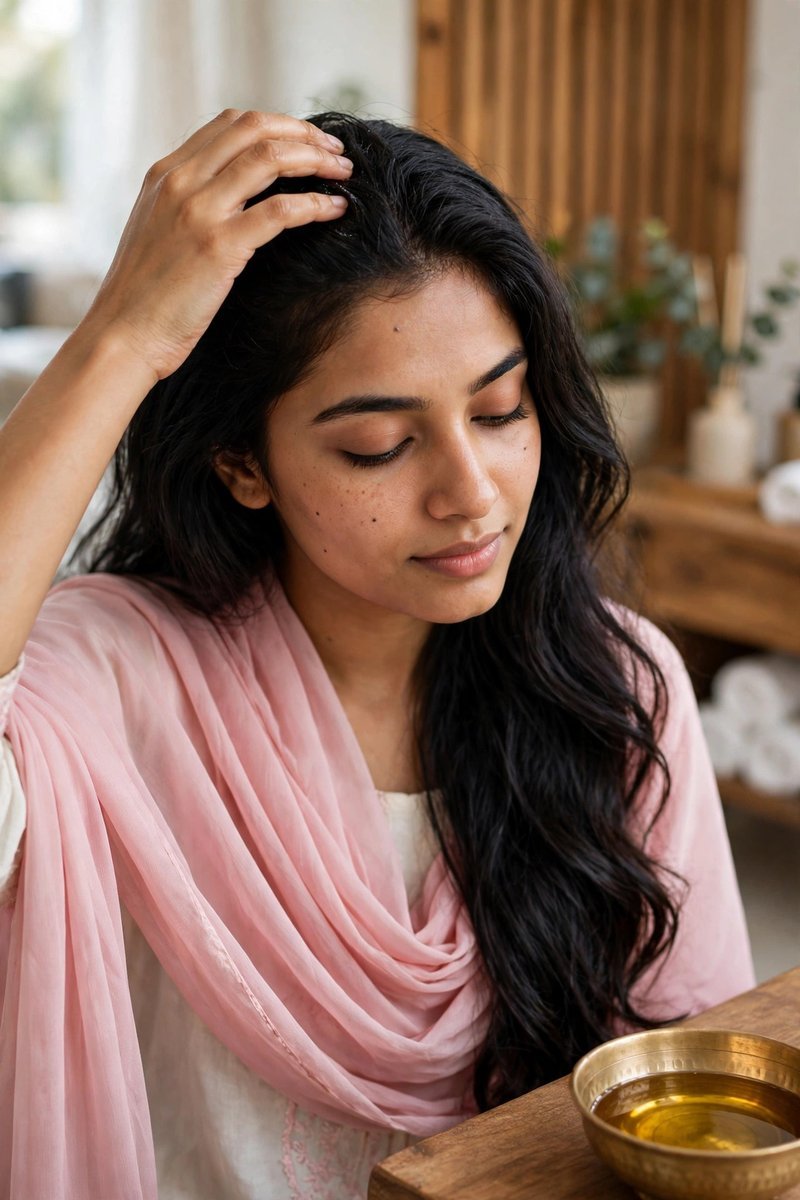
Oil twice a week. Warm coconut, amla or mustard oil — massage into the scalp for five minutes, leave for at least two hours (overnight is best), then wash out. Warm oil penetrates better than cold, and the massage itself boosts blood flow to the follicles.
Wash with lukewarm water. Comfortably warm, never steaming. Finish with a cool rinse if you can bear it — it seals the hair cuticle and adds shine.
Deep-condition weekly. Swap your regular conditioner for a deep-conditioning mask once a week.
Focus on the mid-lengths and ends, where winter dryness hits hardest. Keep it away from the roots if your scalp is oily.
Comb, do not brush. A wide-tooth wooden comb causes less static than plastic brushes. Detangle from the ends upward, in sections, with patience.
Protect at night. A silk or satin pillowcase — or even a soft cotton scarf over your regular pillow — reduces the friction that snaps dry winter hair while you sleep.
Follow this for three weeks and the difference is visible: less hair in the drain, more shine in the mirror.
Desi Totkas: Which Ones Actually Work?
Every Pakistani household has its totkas. Some are gold; some are myths. Here is the honest verdict:
Amla oil — works. Amla (Indian gooseberry) is rich in vitamin C and antioxidants.
Regular amla oiling genuinely supports scalp health and many women report visibly thicker-feeling hair over months. This one earns its reputation.
Onion juice — works for some, with a catch. There is real research showing onion juice can help with patchy hair loss.
The catch is the smell — it lingers through two washes — and it can irritate sensitive scalps. Patch-test first.
Methi (fenugreek) seed paste — good conditioner. Soaked and ground methi makes an excellent natural conditioning mask. It softens hair beautifully, though it will not regrow lost hair on its own.
What does not work: rubbing lemon directly on the scalp (too acidic, causes dryness and irritation), oiling every single day without washing (clogs follicles and causes buildup) and expecting any totka to fix hair fall caused by iron deficiency or thyroid issues. Totkas support healthy hair — they do not cure medical causes.
When Hair Fall Means Something Serious
Normal shedding is 50 to 100 strands a day; in winter, up to 150 can still be seasonal. But see a dermatologist if you notice:
– Visible thinning on the crown or widening of the hair parting
– Bald patches, even small ones
– Hair fall that does not slow down after 2 to 3 months of good care
– Shedding paired with fatigue, irregular periods or sudden weight changes
In Pakistani women, iron deficiency, thyroid disorders and PCOS are common hidden drivers of hair loss — and no oil or shampoo can fix those. A simple blood test often reveals the real culprit. There is no shame in it; there is only a solution you have not found yet.
Professional Treatments Worth Your Money
When home care is not enough, professional treatments bridge the gap. A hair spa treatment drives moisture deep into dry winter hair in a single sitting.
Protein treatments rebuild the keratin structure that winter damage breaks down. And if wedding-season styling has left your hair fried, a keratin treatment can restore manageability for months.
The key is getting the right treatment for your hair’s actual condition — not the trendiest one on Instagram. Our professional hair services start with a proper hair analysis, so you only pay for what your hair genuinely needs.
Book an appointment before the deep winter sets in. The women with the best hair in February are the ones who started protecting it in October.