By Ahsan Ali
If you have ever wondered how often to wash hair, you are in very good company. Every salon chair in Pakistan hears this question several times a week. Your ammi insists on washing every single day and your daadi swears that a weekly champi is enough, but your cousin has not shampooed in twelve days and somehow still looks amazing.
So who is right? Honestly, all of them might be. Dermatologists agree that there is no single golden number for everyone, because the answer depends on your hair type, your scalp and your daily life. This guide breaks it all down in simple words so you can find the rhythm that works for you.
We hear this question every day at our salon in Faisalabad. Clients walk in with limp, greasy hair they wash every morning, and others arrive with itchy, flaky scalps they wash once in ten days. Both extremes cause problems, and both are easy to fix once you understand the science behind the shampoo bottle.
Your Hair Type Decides Everything
Straight and fine hair usually needs washing every one to two days. Oil, called sebum, slides down a straight hair shaft very quickly, so the roots look flat and greasy within a day. If this is your hair type, washing more often is completely fine and healthy.
Wavy hair is the middle ground and does well with a wash two to three times a week. The natural bends slow the oil down a little, so your hair holds its shape and volume for longer. You can easily stretch one more day with a little dry shampoo at the roots.
Curly hair typically needs washing every four to seven days. The twists of each curl act like speed bumps for sebum, so the lengths stay dry even when the scalp feels fine. Washing curls too often strips away precious moisture and leaves them frizzy and unmanageable.
Coily and tightly textured hair is happiest with a wash every seven to fourteen days. Sebum barely travels down these tight spirals, so the strands rely on their natural oils for strength. Overwashing here causes dryness and breakage very fast.
Dry, damaged or color-treated hair should be washed one to two times a week with a gentle shampoo. Chemical treatments like color, rebonding or keratin lift the hair cuticle, and every wash lets a little more color and moisture escape. For this group, washing less genuinely protects the hair.
Think of these numbers as starting points, not rules written in stone. Your scalp gives the final verdict, and the next section explains exactly how to read it.
Read more: Winter Hair Fall Causes and Treatment
Listen to Your Scalp, Not the Calendar
The smartest trick dermatologists teach is simple: wash when your scalp asks, not when the calendar says. An oily, itchy scalp that feels uncomfortable by evening is clearly asking for a wash. A calm, comfortable scalp can happily wait another day.
Here is good news for oily-scalp girls: washing daily is perfectly fine if your hair gets greasy fast. Dermatologist Francesca Fusco explains that daily washing is not bad for an oily scalp, and even adds that everyone should wash at least once a week for basic hygiene. The old fear that washing makes your scalp produce more oil is mostly a myth, because studies show the scalp keeps its oil balance fairly steady over time.
What matters more than frequency is your technique. Always massage the shampoo into your scalp and roots only, then let the suds rinse through the ends on their own. Never scrub the lengths, because they are already delicate, and always work conditioner from the ears down instead of from the roots.
To stretch a day between washes, a dry shampoo at the roots works wonders. Spray it on, wait two minutes, then brush through gently. Treat it as a bridge between washes, not a replacement, because letting powder pile up for days can clog the scalp too.
The Shampoo Science You Were Never Told
Shampoo cleans through tiny cleaning agents called surfactants. The two common ones are sodium lauryl sulfate (SLS) and sodium laureth sulfate (SLES), which grab oil and dirt so water can rinse them away. SLS is the stronger and more irritating of the pair, while SLES is milder and used in most good-quality shampoos.
Here is a fact that surprises everyone: the amount of lather has nothing to do with how clean your hair gets. Foam is added mostly for the feel, because we have all been trained to connect bubbles with cleanliness. A gentle shampoo that barely foams can still clean your scalp perfectly well.
So do you actually need a sulfate-free shampoo? It genuinely helps if your hair is dry, curly or color-treated, or if your scalp is sensitive. But if your hair is very oily and you use lots of styling products, a regular shampoo cleans far more effectively. One ingredient never tells the whole story, so choose a formula made for your hair type instead of chasing labels.
One honest warning from dermatologists: there is no solid scientific evidence that going sulfate-free alone saves your hair color. What fades color fastest is actually plain water and heat, so if your color is precious, wash less often and always keep the water lukewarm.
How Seasons Change Your Washing Routine
Faisalabad summers change everything about hair. The heat makes you sweat, dust settles into your scalp, and wedding functions pile on the styling products. Most people need one extra wash per week in summer, and that is completely normal.
Winter flips the script entirely. The dry air and fog season leave the scalp tight and flaky, so many people can comfortably drop one wash per week. A gentle hydrating shampoo and a rich conditioner keep the ends from turning rough and straw-like in the cold.
During wedding season, when blowouts and backcombing happen every other day, product buildup becomes the real enemy. A clarifying shampoo once a week clears all that residue so your regular shampoo can do its job. Many of our clients book a hair spa treatment in this season to reset their hair completely, and plenty pair the visit with a facial treatment and a spa pedicure, because one full grooming day beats rushing between appointments.
Read more: Salon Treatment Prices in Pakistan: Honest 2026 Guide
The Pakistani Oiling Ritual, Done Right
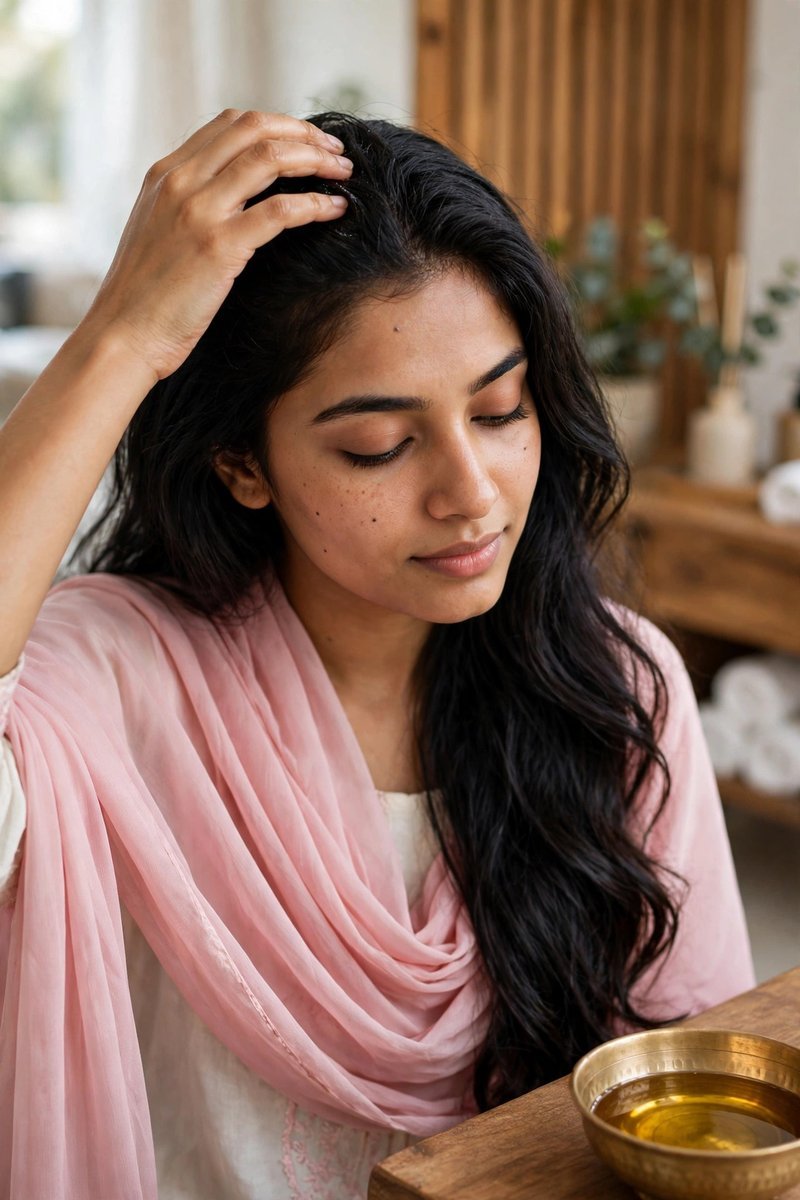
No hair conversation in Pakistan is complete without the champi. Our daadis were right about one thing: a warm oil massage before washing improves blood flow to the scalp and softens the lengths. Coconut, almond and mustard oil are the classics, and two hours of oiling before a wash is the perfect sweet spot.
The mistake most people make is oiling after washing, or leaving oil on for three days straight. Oil on the scalp attracts dust and sweat, which clogs the pores and causes itching. Oil, wait, wash it out fully, and then let your hair breathe.
One more daadi-approved tip: always massage with your fingertips, never your nails. Scratching the scalp with nails creates tiny cuts that invite infection and flaking. Gentle circular pressure for five minutes is all you need for a proper champi.
Warning Signs You Are Washing Too Much or Too Little
Washing too much shows up fast. The hair feels straw-like and brittle, the ends snap when you brush, and color-treated hair fades within weeks. The scalp feels tight and itchy right after a wash, which is your cue to slow down.
Washing too little has its own warning signs. The scalp itches and flakes, the roots clump together within a day, and there is a sour smell even after styling. Leaning on dry shampoo for a whole week is no fix either, because that powdery buildup can clog the scalp too.
Dandruff plays by its own rules. If you see regular flaking, wash two to three times a week with an anti-dandruff shampoo containing zinc pyrithione, selenium sulfide or ketoconazole. And if the itching and flaking refuse to settle after a few weeks, see a dermatologist instead of guessing any further.
And if your hair still looks flat and lifeless no matter how perfectly you wash it, the cut itself might be the issue. Layers and shape change everything about how clean hair sits on your face.
Read more: Best Haircut for Face Shape Guide
Ready to give your hair the wash routine it deserves? Visit our contact page to book a professional hair wash and a free hair assessment at R Zara Salon in Faisalabad.